hot break vs cold break tomato paste
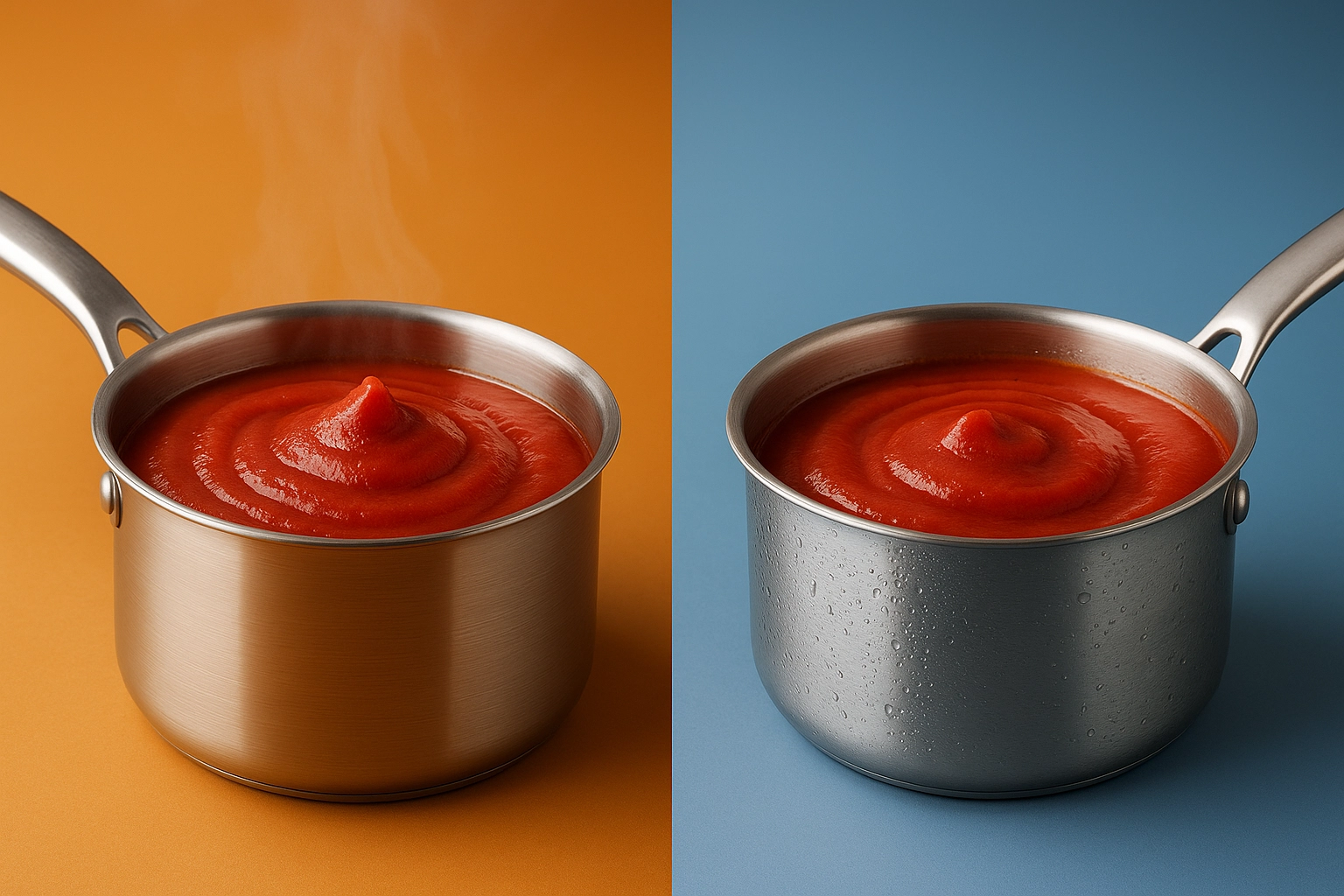
If you’re weighing hot break vs cold break tomato paste, remember you’re choosing texture, color behavior, and flavor profile—not just a temperature. The “break” sets enzyme activity before concentration and aseptic filling.
In hot break, rapid heating inactivates pectinases early, preserving structure and yielding thicker body. Many plants use hot break tomato paste to achieve cling without heavy thickeners.
In cold break, lower early temperatures keep more enzyme activity, leading to lighter body and fresher notes. Cold break tomato paste often shows brighter red impressions at comparable color loads.
Color differs with thermal load: hot-break may skew deeper; cold-break tends to keep higher a/b. Tune your retort/HTST to protect both color and flavor.
Operationally, hot-break tolerates higher shear and can stabilize filling weights; cold-break can cut pumping energy thanks to lower viscosity. Line design and product goals should decide.
There’s no universal winner. Define your sensory target and throughput, then choose accordingly—framing the decision as hot break vs cold break tomato paste aligned to your brand promise. Saryza supplies both styles across key Brix grades.